
Monolithic Core vs. Stacked Baffle Suppressors
Which Silencer Design Is Better?
Suppressors are becoming more and more popular attachments with the passing of the Big Beautiful Bill that has removed the $200 fee for the NFA tax stamp, making them more accessible. There are a lot of options out there, and when choosing a suppressor, most shooters immediately focus on caliber ratings, mounting systems, length, or weight. But one of the most important aspects of suppressor performance is hidden inside the can itself: the baffle design.
Two of the most common suppressor constructions are monolithic core silencers and stacked baffle silencers. Both designs reduce sound effectively, but they approach gas control, heat management, cleaning, and durability in very different ways.
Understanding the differences between monolithic core suppressors and stacked baffle suppressors can help shooters choose the best option for:
- Rimfire rifles
- AR-15 platforms
- Pistols
- Precision rifles
- Pistol caliber carbines
- Tactical setups
Our team at Heresy Design is going to break it down.
What Are Suppressor Baffles?

Suppressor baffles are internal structures designed to slow and redirect high-pressure gases produced when a firearm is fired.
Without baffles:
- Expanding gases leave the barrel violently
- Muzzle blast becomes extremely loud (which can be detrimental to your hearing in close quarters, like home defense situations)
- Flash and recoil increase
Suppressor baffles create controlled expansion chambers that:
- Reduce sound pressure
- Slow gas movement
- Minimize flash
- Improve recoil control
The geometry and layout of those baffles directly affect suppressor performance.
What Is a Monolithic Core Suppressor?
A monolithic core suppressor uses one continuous internal core instead of multiple separate baffles.
The internal core is machined from a single piece of material and includes:
- Expansion chambers
- Gas channels
- Integrated baffle geometry
This entire assembly slides into the suppressor tube as one unit.
Monocore suppressors are especially common in:
- Rimfire silencers
- Lightweight suppressors
- Compact suppressor systems
Benefits of Monolithic Core Suppressors
Easier Cleaning and Maintenance
One of the biggest advantages of a monocore suppressor is simplified maintenance.
Since the internal core removes as one complete piece:
- Carbon buildup is easier to access
- Cleaning takes less time
- Reassembly is much simpler
This is especially important with rimfire suppressors because .22 LR ammunition tends to produce heavy lead and carbon fouling.
Shooters who regularly run high round counts often appreciate the convenience of a monocore design.
Lightweight Suppressor Construction
Many monolithic core silencers are built with lightweight materials like aluminum or titanium.
This helps reduce:
- Front-end rifle weight
- Pistol balance issues
- Overall fatigue during extended shooting sessions
For small-caliber rifles like a Ruger 10/22 or handguns, lightweight suppressors can dramatically improve handling.
A great example of this is the Heresy Design Resonance 22 Monocore Suppressor. Designed specifically for rimfire performance, the Resonance 22 combines an ultralight 4.2-ounce construction with a high-flow monocore system that helps reduce blowback and fouling while still delivering impressive sound suppression.
The Resonance 22 is rated for:
- Full rimfire calibers
- Subsonic 5.7mm ammunition
It also features:
- Tool-less serviceability
- A Type II hard anodized 6061-T6 aluminum core
- Nitride-coated steel components for durability
- Compact dimensions ideal for lightweight rifle and pistol setups
For shooters looking for a lightweight rimfire suppressor that prioritizes easy maintenance and reduced gas blowback, monocore systems like the Resonance 22 showcase why this suppressor design remains extremely popular.
Check out the full review here!
Faster Disassembly
Traditional stacked baffles often require:
- Specific orientation
- Correct assembly order
- Careful alignment
Monolithic suppressors eliminate most of that complexity because the core stays together as one unit.
This creates a more user-friendly experience, especially for newer suppressor owners.
Strong Structural Alignment
Because the core is one continuous piece:
- Internal shifting is minimized
- Alignment consistency improves
- Structural rigidity remains high
This can help maintain reliable suppressor performance over time.
Drawbacks of Monolithic Core Suppressors
Increased Heat Retention
One downside of monolithic core suppressors is heat management.
Since the suppressor core is essentially one solid heat sink:
- Thermal energy spreads quickly
- Heat soak builds rapidly
- Cooldown times may increase
During rapid firing schedules:
- Mirage can become severe
- Suppressor temperatures climb quickly
- The can may stay hot for extended periods
Less Advanced Gas Tuning
Modern stacked baffle suppressors allow manufacturers to fine-tune:
- Gas flow
- Pressure management
- Blowback reduction
- Flash suppression
Because monocore systems use one integrated structure, tuning flexibility can sometimes be more limited compared to advanced stacked baffle systems.
Potentially Less Effective on Hard-Use Rifles
While modern monocore suppressors perform very well, many hard-use rifle suppressors still rely on stacked baffle systems because they often:
- Handle extreme pressure more efficiently
- Reduce sound more effectively on rifles
- Manage sustained heat better
This becomes more noticeable with:
- Short barrel rifles
- 5.56 NATO setups
- Full-auto firing schedules
What Is a Stacked Baffle Suppressor?
A stacked baffle suppressor uses multiple individual baffles placed sequentially inside the suppressor tube.
Each baffle creates:
- Separate expansion chambers
- Gas turbulence zones
- Pressure reduction stages
This design dominates the modern rifle suppressor market because of its:
- Excellent suppression capability
- Heat resistance
- Durability under sustained fire
Advantages of Stacked Baffle Suppressors
Better Sound Suppression
Stacked baffle silencers are often considered the best option for maximum sound reduction.
Their multi-stage gas control system helps:
- Lower decibel levels
- Improve pressure reduction
- Reduce muzzle blast more efficiently
This is especially noticeable with:
- 5.56 suppressors
- .308 suppressors
- Precision rifle setups
Improved Heat Distribution
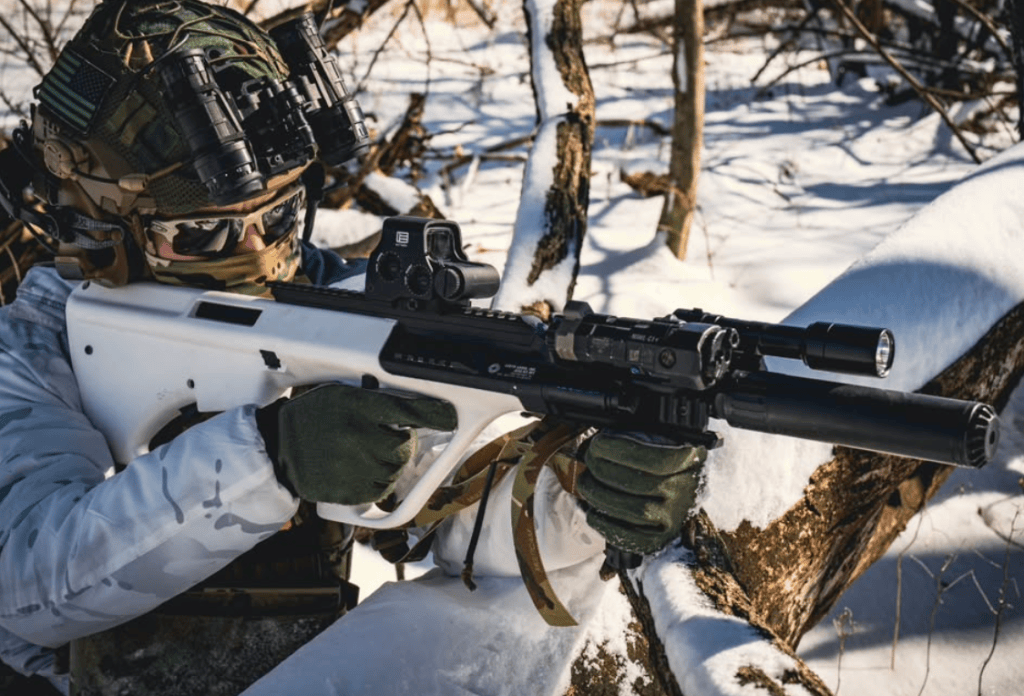
Suppressor heat becomes a major issue during high-volume shooting.
Stacked baffles help distribute heat more evenly throughout the suppressor body, which can:
- Slow concentrated heat buildup
- Reduce thermal stress
- Improve durability during sustained fire
Hard-use suppressors designed for tactical or duty applications frequently rely on stacked baffle systems for this reason.
Better Durability for Extreme Use
Many premium stacked baffle suppressors use materials such as:
- Inconel
- Stainless steel
- Cobalt alloys
These materials are designed to survive:
- Full-auto fire
- High-pressure calibers
- Short barrel rifles
- Aggressive firing schedules
For serious rifle use, stacked baffle systems are often preferred.
Advanced Flow-Through Designs
Modern suppressor engineering has pushed stacked baffles into advanced flow-through configurations that help reduce:
- Backpressure
- Gas-to-face issues
- Blowback on AR platforms
This is especially valuable on:
- Suppressed AR-15s
- SBRs
- Tactical carbines
Drawbacks of Stacked Baffle Suppressors
More Difficult Cleaning
Individual baffles can become difficult to separate due to:
- Carbon buildup
- Lead fouling
- Carbon lock between sections
This is particularly problematic in rimfire suppressors.
More Complex Reassembly
Some suppressors require:
- Specific baffle orientation
- Proper stacking order
- Careful installation
Incorrect assembly can negatively affect:
- Accuracy
- Reliability
- Suppression performance
Heavier Overall Construction
Because stacked suppressors use multiple internal components and heavier materials, they are often:
- Heavier
- Larger
- More front-end weighted
This is common with duty-grade rifle suppressors.
Monolithic Core vs. Stacked Baffles: Which Suppressor Is Better?

The answer depends entirely on the intended use.
Best Uses for Monolithic Core Suppressors
Monocore silencers are excellent for:
- Rimfire rifles
- .22 LR pistols
- Lightweight setups
- Recreational shooting
- Easy maintenance
Shooters who prioritize:
- Fast cleaning
- Low weight
- Simplicity
will often prefer monolithic suppressors.
Best Uses for Stacked Baffle Suppressors
Stacked baffle silencers dominate:
- Tactical rifle setups
- AR-15 suppressors
- Precision rifle systems
- High-volume training
- Duty applications
They are often the preferred option for shooters who prioritize:
- Maximum suppression
- Extreme durability
- Heat resistance
- Reduced blowback
Final Thoughts on Monolithic Core vs. Stacked Baffle Silencers
Both suppressor designs offer major advantages depending on the platform and shooting style.
Monolithic core suppressors excel in:
- Simplicity
- Lightweight handling
- Rimfire performance
- Easy maintenance
Meanwhile, stacked baffle suppressors dominate hard-use rifle applications because of their:
- Superior heat management
- Advanced gas control
- Durability under sustained fire
For rimfire shooters looking for a lightweight, easy-to-maintain monocore suppressor, options like the Resonance 22 from Heresy Design demonstrate why monocore silencers remain highly effective and extremely popular.
Understanding how these suppressor systems work helps shooters choose the best silencer for their firearm, firing schedule, and long-term performance goals.
Check out Heresy Design on Instagram!


0 Comments